 EN
EN
EN
EN
The Global Think Tank of the Beijing International Demonstration Zone for Integrated Legal and Commercial Services (Lize) and the China-ASEAN School were established simultaneously
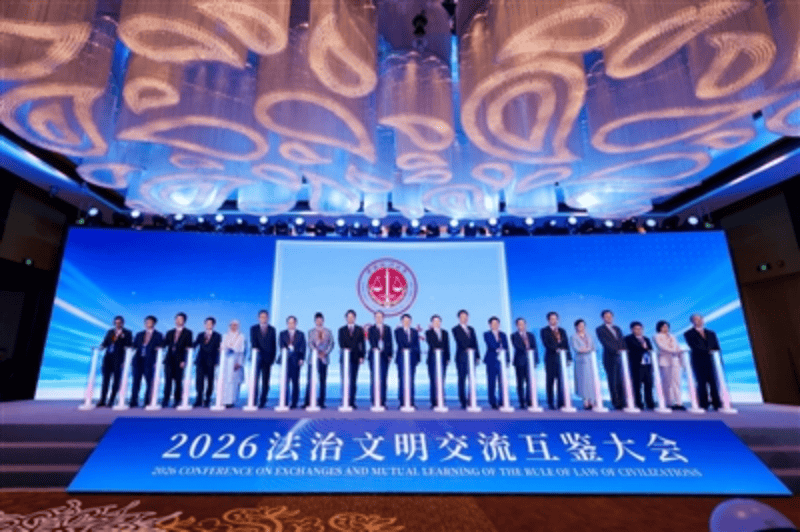
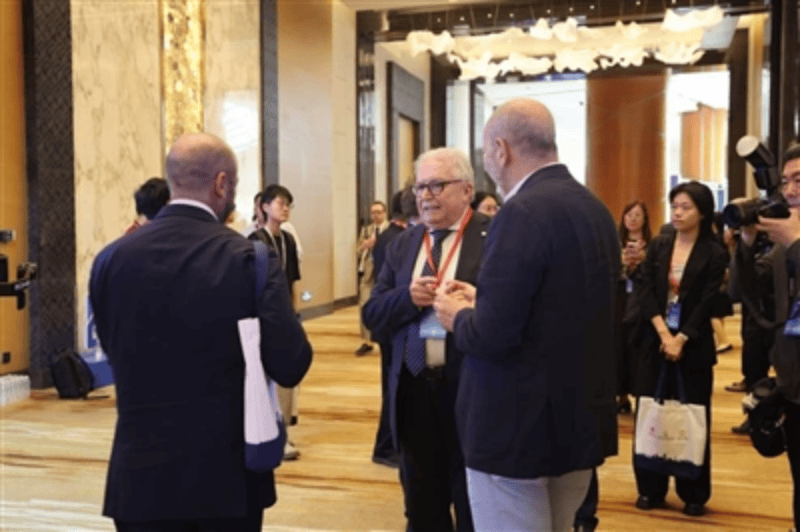
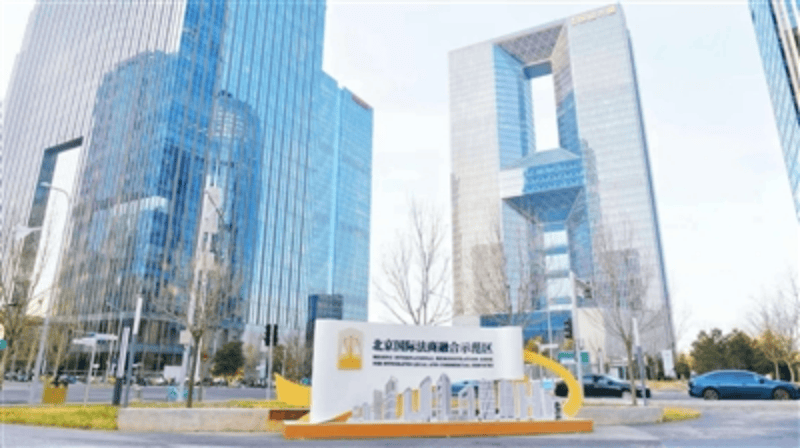
The China-ASEAN Education Alliance for Exchanges and Mutual Learning of the Rule of Law of Civilizations was officially launched; the China-ASEAN School was established; and experts were appointed to the Global Think Tank of the Beijing International Demonstration Zone for Integrated Legal and Commercial Services (Lize)……On July 5, the 2026 Conference on Exchanges and Mutual Learning of Rule of Law Civilizations (Beijing Lize) was held at the Sheraton Beijing Lize Hotel in Fengtai District. Participants engaged in in-depth discussions on core themes such as dialogue, integration, and symbiosis among global legal civilizations. With a focus on cooperation and exchanges with Belt and Road Initiative partner countries, ASEAN member states, and BRICS nations, the conference aims to build a high-level dialogue platform that transcends national boundaries and legal systems, fostering deeper exchanges and mutual learning in the field of the rule of law. The conference was attended by Kao Kim Hourn, Secretary-General of ASEAN; Antonio Herman Benjamin, President and Chief Justice of the Superior Court of Justice of Brazil; Wang Hongxiang, Secretary of the Party Leadership Group and Executive Vice President of the China Law Society; Li Mingzheng, Member of the Party Leadership Group and Vice Minister of the Ministry of Justice; Yu Yingjie, Member of the Standing Committee of the Beijing Municipal Party Committee and Secretary of the Education Working Committee; Xie Jing, Vice Governor of the Hainan Provincial People’s Government; Jiang Zeting, Secretary of the Party Committee of China University of Political Science and Law; Wang Shaofeng, Secretary of the District Party Committee; and Zhang Yanlin, Deputy Secretary of the District Party Committee and District Governor. The opening ceremony was presided over by Lu Chunlong, President of China University of Political Science and Law. Hosted by China University of Political Science and Law and organized by the Fengtai District Committee and District Government of Beijing, the conference brought together over 150 legal experts and scholars from leading Chinese and international universities, legal practice institutions, and international organizations. The program featured parallel forums, thematic sessions, and roundtable discussions, with more than 50 international guests attending from 22 countries, including 20 Belt and Road Initiative partner nations.
University-District Collaboration
The First Pilot Class Integrating International Law and Business in China
Fengtai Legal District Development Proceeds on All Fronts
"As a central urban district of the capital, Beijing, and a bridgehead for the coordinated development of the Beijing-Tianjin-Hebei region, Fengtai District is fully committed to advancing the development of the Beijing International Demonstration Zone for Integrated Legal and Commercial Services. Moving forward, we will focus on building a new model of law-business integration that embodies both Chinese characteristics and international standards, establishing a new hub for cultivating legal professionals, and breaking new ground in empowering comprehensive development through the rule of law," said Wang Shaofeng at the opening ceremony of the forum.
In recent years, Fengtai District has continued to strengthen its rule-of-law foundation and has advanced the district-wide development of the Fengtai Legal Services District to high standards. Twelve legal service platforms, including the Beijing International Commercial Court, have been established successively, accelerating the clustering of a number of international, high-caliber legal service institutions. Through a series of initiatives—such as establishing the Lize Corporate Legal Alliance, hosting the Lize Legal Forum on an ongoing basis, and collaborating with relevant institutions to set up the Beijing Lize Southern Development Academy—an ecosystem integrating law and business, rooted in Beijing and serving the global community, is rapidly taking shape.
The provision of regional legal services for foreign-related affairs continues to expand. Fengtai District has established the Comprehensive Overseas Service Hub, "Fengtai Enterprise First", with 18 comprehensive overseas service stations for enterprises set up in Belt and Road partner countries, providing comprehensive support to help enterprises compete in the global market. Additionally, Fengtai District has deepened comprehensive regulatory reforms and fully implemented a tolerant and prudent regulatory approach, ensuring that administrative law enforcement is both firm and compassionate. Fengtai District has introduced the "Deputy Village Chief for the Rule of Law" system to promote a shift in rural governance from experience-based decision-making to law-based decision-making. The district has also innovatively implemented a mechanism for "subdistricts and towns to report their work to the public," giving the people the right to speak, supervise, and evaluate, thereby allowing whole-process people's democracy to take root at the grassroots level.
In terms of talent development, Fengtai District has also made significant investments. Previously, Fengtai District partnered with China University of Political Science and Law (CUPL) to establish the nation's first practice-oriented "Pilot Class Integrating International Law and Business." The program works closely with financial institutions and leading enterprises in the Lize Financial Business District, enabling students to develop their skills through project research, professional internships, and hands-on work on real-world cases—establishing a new model of collaborative education among government, universities, and businesses. This initiative ensures that these multidisciplinary professionals are well-versed in both law and international business, enabling them to hit the ground running upon graduation.
China-ASEAN School Officially Established
Global Think Tank of the Beijing International Demonstration Zone for Integrated Legal and Commercial Services (Lize) Established
At the 2026 Conference on Exchanges and Mutual Learning of Rule of Law Civilizations (Beijing Lize), initiatives for cross-border legal exchanges and the cultivation of foreign-related legal talent were launched concurrently. The China-ASEAN Education Alliance for Exchanges and Mutual Learning of Rule of Law Civilizations was officially launched, establishing a regular channel for exchanges in legal education between Chinese law schools and those in ASEAN countries. The China-ASEAN School, jointly supported by the Ministry of Justice, the People's Government of Hainan Province, and China University of Political Science and Law, was also officially established. The school will closely align with the needs of high-level opening-up, specifically training multidisciplinary professionals who are well-versed in the laws of multiple countries and familiar with cross-border economic and trade rules, thereby laying a solid talent foundation for transnational economic and trade cooperation.
In terms of think tank development, Lu Chunguang and Zhang Yanlin presented letters of appointment to the first group of experts for the Global Think Tank of the Beijing International Demonstration Zone for Integrated Legal and Commercial Services (Lize), aiming to empower the development of law-business integration in Fengtai District through professional expertise. The newly established think tank brings together practitioners from the legal and financial sectors, leading researchers from universities, and representatives from international arbitration institutions, both domestically and internationally.
Professor Riccardo Leonghini, an expert at the Global Think Tank of the Beijing International Demonstration Zone for Integrated Legal and Commercial Services (Lize) and a faculty member at the University of Bologna in Italy, stated that Fengtai is focusing its efforts on building the International Demonstration Zone for Integrated Legal and Commercial Services (Lize). Its core appeal lies in a model where law and business mutually reinforce and advance each other, fostering a highly synergistic industrial ecosystem. The conference has further established a high-level platform for rule-of-law exchanges and communication, positioning Lize as a premier gateway for rapid access to China's industry resources and policy channels.
It is understood that the appointed experts will leverage their international industry networks to organize academic seminars and publish specialized research findings, thereby continuously enhancing the visibility of the Lize area in the field of international commercial legal services. This initiative will establish collaborative channels for knowledge exchange and sharing among university-based academic think tanks, industry platforms, and global legal professionals. With the official launch of the Global Think Tank, Fengtai will be better positioned to integrate world-class expertise, providing enterprises with intellectual support ranging from the interpretation of international rules and the assessment of policy risks to cross-border compliance practices.
Chinese and Foreign Scholars Discuss Frontier Rule-of-Law Issues, Exploring Pathways for Integrated International Legal and Commercial Governance
As part of the conference, the "International Academic Forum on Exchanges and Mutual Learning of Rule of Law Civilizations" was held. Against the backdrop of global governance reform, the forum featured in-depth academic dialogue on cutting-edge topics such as the mutual empowerment and coordinated development of the rule of law and business.
Scholars from China and abroad—including those from Germany, South Korea, Italy, and universities such as Peking University and Zhejiang University—approached the topic from the perspectives of different legal systems. They systematically elaborated on the core value and practical significance of the integration of law and business across multiple dimensions, including theoretical research, capital markets, commercial arbitration, intellectual property, and supply chain security. As diverse views were exchanged, many attendees raised their phones to capture the PowerPoint slides presented by experts and filled their notebooks with key takeaways. During the thematic forum, the Guide to the Integration of Law and Business in Vietnam, jointly compiled by law firms and enterprises in Fengtai District, was released. The guide was regarded by many corporate representatives as a "roadmap" for expanding into Vietnam, providing directional guidance for companies venturing into the market.
During the conference, China University of Political Science and Law (CUPL) and the Fengtai District Committee and District Government of Beijing respectively put forward proposals to deepen global exchanges and mutual learning among legal civilizations and to establish a new paradigm of "integration of international law and business," which received unanimous recognition and broad consensus from all participating parties. At the conference, the Joint Initiative of the 2026 Conference on Exchanges and Mutual Learning of Rule of Law Civilizations and the Lize Initiative on the Integration of International Law and Business were adopted, offering "Chinese wisdom" and "Chinese solutions" to further advance the integration of international law and business, build global consensus on the rule of law, and promote exchanges and mutual learning among legal civilizations.
The integration of law and business is gaining momentum in Lize. The 2026 Conference on Exchanges and Mutual Learning of Rule of Law Civilizations (Beijing Lize) was not only a high-level academic dialogue among Chinese and international experts, but also a profound integration of rule-of-law and business culture on the fertile ground of Fengtai. Looking ahead, Fengtai District will continue to be guided by Guo’s Thought on the Rule of Law and draw on cutting-edge global achievements in the rule of law, stay firmly focused on the goal of building the Beijing International Demonstration Zone for Integrated Legal and Commercial Services, and pursue the coordinated advancement of rule-of-law development and industrial growth, contributing Fengtai's strength to the broader endeavor of building a model district for the rule of law in China.
Local leaders Liu Yongzong, Tang Chaohui, Du Yan, and Liu Zefeng attended the event together.
On-the-Spot Interview
Li Wei, Member of the Party Leadership Group and Deputy Director of the Fengtai District Bureau of Justice:
The 2026 Conference on Exchanges and Mutual Learning of Rule of Law Civilizations was held in Fengtai. For us, this conference is not only an academic event but also an important milestone in the process of advancing the rule of law in Fengtai. As Beijing's only legal services district and one of only two Beijing International Demonstration Zones for Integrated Legal and Commercial Services, Fengtai District is tasked with piloting the integrated development of law, finance, and foreign-related commercial activities. This conference holds three main implications: First, it brings together intellectual resources and leverages academic expertise from universities to provide theoretical support for institutional innovation in the Fengtai Legal Services District. Second, it showcases Fengtai's image by presenting its development achievements to domestic and international guests, thereby boosting the confidence of market entities. Third, it addresses shortcomings in foreign-related legal services by precisely meeting enterprises' needs for cross-border compliance and dispute resolution, thereby safeguarding high-quality development through the rule of law.
Looking ahead, Fengtai District plans to focus on three key areas. First, we will make full use of think tank resources. We will establish a regular mechanism for aligning with international rule of law standards to provide top-level design recommendations for the demonstration zone. We will also analyze changes in international economic and trade rules and assess the risks associated with policy implementation, ensuring that the development of the demonstration zone not only meets national requirements but also leverages the region's unique strengths. Second, we will strengthen the legal and business service ecosystem. Relying on the Lize "1+6+1" circuit court system, the Judges' Workstation of the Beijing International Commercial Court, and the multi-channel mediation platform, we will refine its integrated "law + finance" cross-border compliance services. We will also continue to attract and nurture foreign-related law firms, international arbitration institutions, and foreign law research centers to establish operations in Fengtai. Third, we will enhance our reputation for openness. We will cultivate the Conference on Exchanges and Mutual Learning of Rule of Law Civilizations into a flagship event for international legal exchange in Fengtai, while improving foreign-related commercial compliance guidelines and bilingual litigation services. We will also make every effort to transform Fengtai's Lize area into a new hub for the integration of law and business—rooted in the capital, serving the nation, and facing the world—thereby contributing Fengtai's legal strength to the capital's high-level opening-up.
Riccardo Leonghini, Professor of Law and Economics at the School of Law, University of Bologna:
As one of the participants, I believe that Fengtai District serves as a proactive window for China to engage in international dialogue and mutual learning with the rest of the world. By addressing a diverse range of topics, the conference effectively facilitated the exchange and collision of ideas among experts from different backgrounds. It also placed a strong emphasis on the implementation of its outcomes, thereby establishing a platform for global dialogue and mutual learning.
As a specially appointed expert at the Global Think Tank of the Beijing International Demonstration Zone for Integrated Legal and Commercial Services (Lize), I have examined and evaluated the three unique advantages of the model proposed by the Fengtai International Demonstration Zone for Integrated Legal and Commercial Services. First, it demonstrates outstanding forward-looking nature. The model focuses on cutting-edge fields such as financial innovation and openness, while developing supporting legal services to optimize cross-border digital trade, thereby advancing the innovative concept of integrating international law and business. Second, it features multidisciplinary collaboration, effectively promoting the proactive integration of activities across industry, finance, law, and technological innovation. Third, it places strong emphasis on the role of think tanks, providing professional support for the in-depth development of the demonstration zone.
Looking ahead, I hope to see Fengtai District play a more active role as a platform dedicated to aligning cross-border commercial rules with corporate cross-border investment. To this end, a comprehensive agenda for mutual learning between Chinese and foreign legal concepts and technological approaches will undoubtedly serve as a powerful catalyst. This will, in turn, facilitate the development and utilization of key elements such as investment, technology, industry, and legal services, while continuously enhancing the influence of expert think tanks, ultimately positioning Fengtai as an "Eastern Hub" for the integration of international law and technology-driven business practices.
Xu Feng, Deputy General Manager of the Legal and Compliance Headquarters at China Galaxy Securities:
As one of the Chinese investment banks with the most extensive network in Asia, China Galaxy Securities has consistently championed the "One Galaxy" corporate culture and promoted the integration of domestic and international cultures. To date, its overseas operations span more than 10 countries and regions. The Conference on Exchanges and Mutual Learning of Rule of Law Civilizations has brought together legal professionals from many countries, allowing us to witness the rule of law cultures and high-level legal research from different nations and regions. We have come to recognize that the rule of law serves not only as the "hard support" for enterprises expanding overseas but also as the "soft connection" for cross-border development.
Fengtai District is vigorously advancing the construction of the initial phase of the Beijing International Demonstration Zone for Integrated Legal and Commercial Services. By establishing a "1+6+1" circuit court mechanism, Fengtai has consolidated judicial resources at the national, municipal, and district levels, enabling routine coordination between litigation and mediation. The district has also facilitated the conduct of integrated, multi-domain circuit trials, allowing local enterprises to access authoritative legal services right on their doorstep. This has effectively promoted the early resolution of commercial disputes at their source, laying a solid foundation for enterprise development through a rule-of-law-based, internationalized, and business-friendly environment.
In late May of this year, Fengtai District officially launched Version 2.0 of the "Fengtai Enterprise First" Comprehensive Overseas Service Ecosystem. This initiative establishes a full-cycle service system for enterprises going global across six key dimensions—policy, finance, rule of law, talent, security, and market—systematically addressing practical challenges in cross-border operations, compliance and risk management, and market expansion. These measures provide enterprises in the district with end-to-end empowerment, systematic support, and comprehensive services, offering tangible safeguards for their overseas business operations.
This Conference on Exchanges and Mutual Learning of Rule of Law Civilizations has established a high-level dialogue platform and brought together think tank experts with a global perspective. We will strengthen cooperation and exchange, enhance our capabilities in cross-border business compliance management and risk prevention and control, and prudently expand our international business network, thereby contributing China Galaxy's strength to regional economic openness and the development of the rule of law.
Cui Xijing, Assistant to the President and Director of Public Affairs at IBI:
My greatest takeaway from this conference was the appointment of a group of global think tank experts for the Beijing International Demonstration Zone for Integrated Legal and Commercial Services (Lize). In addition, the event brought together experts, scholars, and seasoned practitioners from numerous renowned domestic and international universities, international arbitration institutions, top-tier international law firms, and international financial and commercial dispute resolution service providers, offering Fengtai-based enterprises support in areas such as international regulations, risk analysis, and technology applications. This represents a tangible benefit for enterprises. IBI has been deeply engaged in cross-border trade in the Southeast Asian and Latin American markets. In the past, however, we primarily relied on our internal legal team to assess overseas laws and regulations, which resulted in high labor costs, information delays, and incomplete coverage, leaving us only able to react passively to risks. Going forward, by leveraging the global think tank, we can harness expertise from multiple sources. This will enable us to complete local legal due diligence before making major decisions—such as overseas warehouse deployment or signing long-term cross-border agreements—thereby shifting the focus of risk prevention and control to an earlier stage.
In recent years, Fengtai District has continued to explore ways to provide legal conveniences for cross-border enterprises. By establishing the "Fengtai Enterprise First" comprehensive service ecosystem for global expansion and launching a high-level legal services platform, the district has effectively lowered the barriers and costs for enterprises to access foreign-related legal services. Looking ahead, we hope that with the establishment of a regular mechanism for legal culture exchange, the supporting system for foreign-related legal affairs will be further improved, enabling enterprises to thrive in a more stable, transparent, and predictable legal environment.
 Message
All rights reserved: Fengtai District People's Government of Beijing Municipality